

Introduction: Why Having an ID Matters How to Create an ID
In everyday life, an identification document is more than just a card you carry in your wallet—it is a key that opens access to essential services, opportunities, and rights. Whether you are enrolling in a school, applying for a job, opening a bank account, or traveling, having a valid ID is often the first requirement. It serves as official proof of who you are and helps institutions verify your identity quickly and securely.
For many people, especially students or young adults applying for their first ID, the process can feel confusing. There are different types of IDs, various documents required, and multiple steps involved. However, once you understand the basics, creating or applying for an ID becomes a straightforward and manageable task. The key is knowing what type of ID you need and following the correct process carefully.
An ID is not limited to just government-issued documents like a passport or national identity card. It can also include school IDs, employee cards, or any officially recognized identification issued by an organization. Each type of ID serves a specific purpose. For example, a school ID helps identify students within an institution, while a government ID is used for broader purposes such as accessing public services or verifying identity in legal situations.
One of the main reasons IDs are so important is security. In a world where identity verification is crucial, IDs help prevent fraud and ensure that services are provided to the right person. Banks, educational institutions, and employers rely on identification documents to maintain accurate records and protect individuals from identity theft. Without a proper ID, it can be difficult to complete even basic tasks like receiving payments or registering for services.
Another important aspect of having an ID is convenience. Instead of repeatedly proving your identity through multiple documents, a single ID card simplifies the process. It acts as a trusted reference that is widely accepted. This is especially useful in situations where quick verification is needed, such as during travel or official registrations.
The process of creating an ID generally involves a few common steps, regardless of the type. These include gathering necessary documents, filling out an application form, submitting your details, and completing a verification process. While the exact requirements may vary depending on the issuing authority, the overall structure remains similar. Understanding these steps in advance can save time and reduce stress during the application process.
It is also important to ensure that all the information you provide is accurate and consistent. Even small mistakes, such as spelling errors in your name or incorrect dates, can lead to delays or rejection of your application. Taking a few extra minutes to double-check your details can make a big difference in how smoothly the process goes.
In recent years, the process of obtaining an ID has become more accessible due to digital platforms. Many applications can now be completed online, allowing users to upload documents and track their application status from the comfort of their homes. This has made the process faster and more convenient, especially for those living in remote areas.
Ultimately, having an ID is an essential part of modern life. It not only proves your identity but also connects you to a wide range of services and opportunities. By understanding its importance and learning how to create one properly, you can ensure that you are prepared for various aspects of personal, educational, and professional life.
Types of IDs You Can Create
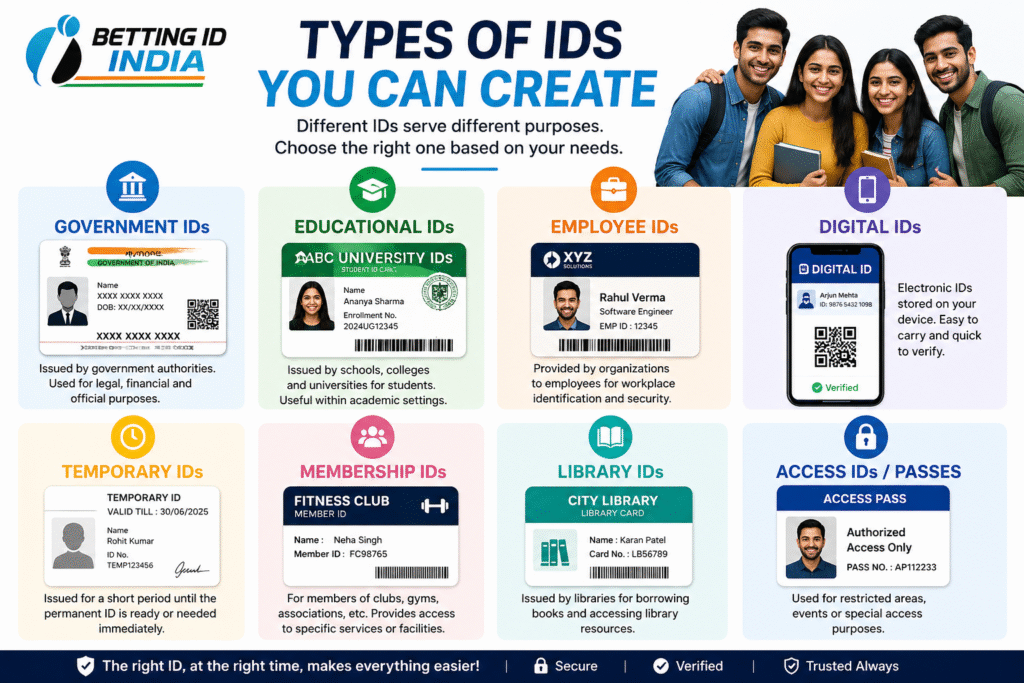
Before starting the application process, it is important to understand that not all identification documents serve the same purpose. Different IDs are designed for different situations, and choosing the right one depends on your needs. Knowing the types of IDs available will help you avoid confusion and ensure that you apply for the correct document from the beginning.
One of the most common categories is government-issued identification. These are official documents provided by national or regional authorities and are widely accepted as proof of identity. Examples include national identity cards, passports, and driver’s licenses. These IDs are often required for legal, financial, and administrative purposes. They carry a high level of credibility because they are issued after a detailed verification process. If you need an ID for banking, travel, or official work, this is usually the type you should focus on.
Another widely used category is educational IDs. Schools, colleges, and universities issue ID cards to their students. These cards help institutions maintain records and ensure security within campus premises. A student ID typically includes basic information such as the student’s name, photograph, enrollment number, and institution details. While it may not be accepted everywhere as a primary proof of identity, it is extremely useful within academic environments and sometimes offers benefits like discounts or access to certain services.
Employee IDs are another important type. Organizations provide these to their staff members as a way to identify employees and control access to the workplace. These IDs often include the employee’s name, designation, company logo, and a unique identification number. In many offices, employee IDs are also used for attendance tracking and security purposes. Although they are mainly used within a company, they can sometimes serve as supporting identification when combined with other documents.
There are also digital IDs, which have become increasingly popular in recent years. With the growth of online services, many institutions now provide electronic versions of identification. These digital IDs can be stored on smartphones or accessed through official apps. They are convenient, easy to carry, and often come with features like QR codes for quick verification. While not all digital IDs replace physical ones, they are gaining acceptance in many sectors due to their ease of use.
Another category worth mentioning is temporary or provisional IDs. These are issued for a short period while your main ID is being processed or when you need immediate identification. For example, some organizations provide temporary cards to new employees until their permanent ID is ready. Similarly, applicants may receive a temporary acknowledgment slip during the ID application process, which can serve as proof until the final document is issued.
Special-purpose IDs also exist for specific groups or activities. These include membership cards, library cards, and access passes. While they may not function as general proof of identity, they are essential within their respective contexts. For instance, a library card allows you to borrow books, while a membership ID grants access to exclusive services or facilities.
Choosing the right type of ID depends on your immediate and long-term needs. If you are a student, your school ID might be enough for daily use within your institution. However, if you plan to travel or open a bank account, you will need a government-issued ID. Similarly, if you are starting a job, your employer will provide you with an employee ID for workplace access.
It is also important to consider the level of acceptance each ID offers. Government-issued IDs are generally recognized across multiple platforms, while others may have limited use. Understanding this distinction can save you time and effort, as applying for the wrong type of ID may lead to unnecessary delays.
In summary, IDs are not one-size-fits-all documents. Each type serves a unique purpose, and being aware of these differences helps you make informed decisions. By identifying which ID suits your requirements, you can move forward with the application process confidently and efficiently.
Documents Required for ID
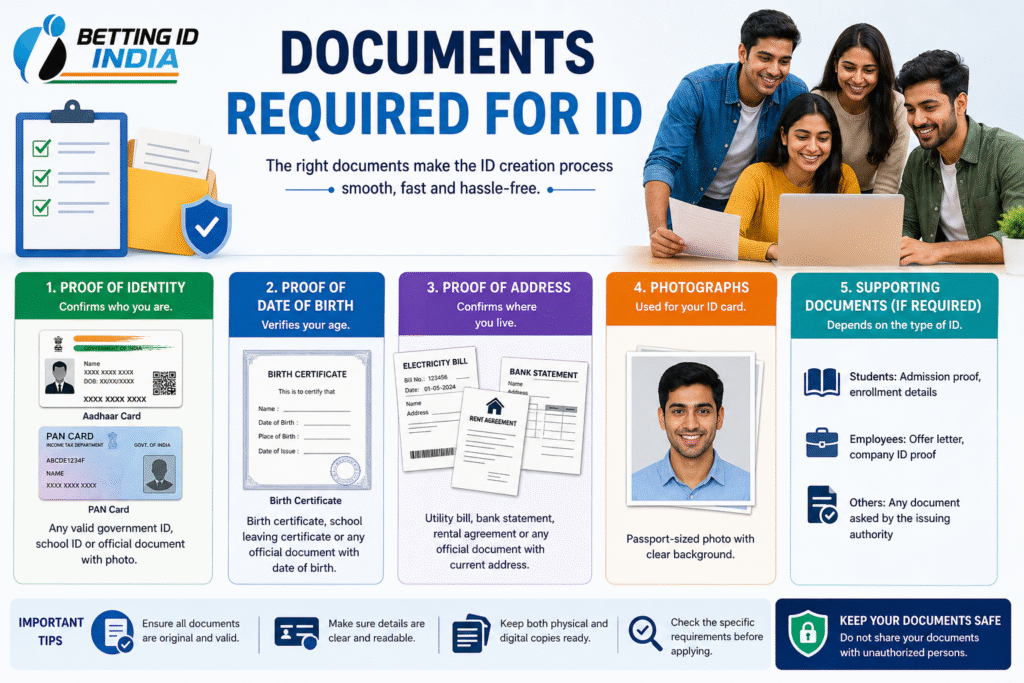
Once you have decided which type of ID you need, the next step is to prepare the necessary documents. This is one of the most important stages in the entire process, because incomplete or incorrect documentation is one of the most common reasons for delays or rejection. Understanding what documents are required—and why they matter—can make the process much smoother.
In most cases, the purpose of submitting documents is to prove three main things: your identity, your date of birth, and your address. Different authorities may ask for different combinations of documents, but these three categories remain the foundation of almost every ID application.
The first and most essential requirement is proof of identity. This confirms that you are who you claim to be. Common documents used for identity verification include an existing government-issued ID, a school ID, or any officially recognized document that contains your name and photograph. If you are applying for your first ID and do not yet have a government-issued document, institutions may accept alternative proofs such as a certificate issued by a recognized authority.
Next comes proof of date of birth. This is important because many IDs include your age or date of birth as a key detail. A birth certificate is the most widely accepted document for this purpose. In some cases, educational certificates or official records that clearly mention your date of birth can also be used. It is important that the information matches exactly with what you enter in your application form.
Proof of address is another critical requirement. This helps authorities verify where you live and ensures that your ID is linked to the correct location. Documents such as utility bills, rental agreements, or bank statements are commonly accepted as address proof. These documents usually need to be recent, often within the last few months, to confirm that the address is current.
Photographs are also a standard requirement for most ID applications. Typically, you will need passport-sized photos with a clear background. These photos are used to print your ID card and help with visual identification. Some modern application processes may allow you to upload digital photos instead of submitting physical copies, but the quality and format requirements still need to be followed carefully.
In addition to these basic documents, some IDs may require supporting documents depending on their purpose. For example, students applying for a school or college ID may need to provide admission proof or enrollment details. Employees may be asked to submit offer letters or company verification documents when applying for workplace IDs. Each case is slightly different, so it is always a good idea to check the specific requirements beforehand.
Another important aspect to keep in mind is document consistency. All the details across your documents should match exactly. Even small differences in spelling, abbreviations, or formatting can create issues during verification. For instance, if your name is written differently on two documents, it may raise questions and delay the approval process. Ensuring uniformity across all your records can save you a lot of trouble later.
It is also helpful to keep both physical and digital copies of your documents. Many applications today are completed online, which means you will need scanned copies or clear photographs of your documents. At the same time, having physical copies ready is useful if you are required to visit an office for verification. Organizing your documents in advance can make the entire process faster and less stressful.
Security is another factor you should not overlook. Since your documents contain personal information, it is important to handle them carefully. Avoid sharing them with unauthorized individuals or uploading them to untrusted platforms. Always use official websites or verified channels when submitting your details.
In summary, preparing the right documents is a crucial step in creating an ID. By understanding what is required and ensuring that your documents are accurate, complete, and consistent, you can avoid unnecessary delays and move through the application process with confidence.
Step-by-Step Process to Create an ID
After understanding the types of IDs and preparing the required documents, the next step is to go through the actual application process. While the exact procedure may vary depending on the type of ID and the issuing authority, the overall steps are generally similar. Knowing what to expect at each stage can help you complete the process smoothly and avoid unnecessary delays.
The first step is to identify the correct platform or office where you need to apply. Many IDs today can be applied for online through official websites, while others may require you to visit a physical office. It is important to use only authorized platforms to ensure your information remains safe and your application is valid. Before proceeding, take a few minutes to read the official instructions carefully so you understand the requirements.
Once you have identified the correct platform, the next step is to fill out the application form. This is a crucial part of the process because all the information you provide will be used to create your ID. You will typically need to enter details such as your full name, date of birth, address, and contact information. Some forms may also ask for additional details depending on the type of ID. It is important to enter accurate information and double-check everything before moving forward, as even small errors can lead to rejection or delays.
After completing the form, you will need to upload or submit your documents. If you are applying online, this usually involves uploading scanned copies or clear photographs of your documents. Make sure the images are readable and meet the specified format and size requirements. If you are applying offline, you will need to submit photocopies along with the original documents for verification. Keeping your documents organized in advance can make this step much easier.
The next stage is the verification process. This is where the issuing authority checks the authenticity of the information and documents you have provided. In some cases, this may include biometric verification, such as fingerprint scanning or a live photograph. For certain IDs, you may also be required to visit a center in person to complete this step. Verification is an essential part of the process, as it ensures that the ID is issued to the correct individual.
In many cases, there is a fee associated with the application. This fee can usually be paid online through secure payment methods or at the office where you submit your application. It is important to keep a record of your payment receipt, as it may be required for tracking your application or resolving any issues later.
Once your application has been submitted and verified, it enters the processing stage. During this time, your details are reviewed, and your ID is prepared. The duration of this stage can vary depending on the type of ID and the issuing authority. Some IDs are issued quickly, while others may take several days or even weeks. Many online systems provide a tracking feature that allows you to check the status of your application in real time.
After the processing is complete, your ID will be issued. Depending on the system, you may receive it in different ways. Some IDs are delivered directly to your registered address, while others can be collected from a designated center. In the case of digital IDs, you may be able to download them from the official website or app. It is important to check all the details on your ID once you receive it to ensure there are no errors.
Finally, make sure to store your ID safely. It is a valuable document that you will need for various purposes, so keeping it secure is essential. You should also consider keeping a digital copy as a backup in case the original is lost or damaged.
In conclusion, creating an ID involves a series of clear and manageable steps. By following the correct process, providing accurate information, and ensuring your documents are in order, you can complete your application without complications. Taking the time to understand each stage will not only save you effort but also increase your chances of quick approval.
Tips for Quick Approval
Applying for an ID is not just about filling out a form and submitting documents—it is also about how accurately and carefully you complete each step. Many applications get delayed or rejected due to small mistakes that can easily be avoided. If you want your ID to be approved quickly, it is important to follow a few practical tips that can make the entire process smoother and more efficient.
One of the most important things to focus on is accuracy. Every detail you enter in your application form should match your supporting documents exactly. Even minor differences, such as spelling variations in your name or incorrect dates, can create complications during verification. Before submitting your application, take a moment to review all the information carefully. This simple habit can save you from unnecessary delays.
Another key factor is the quality of your documents. Whether you are uploading digital copies or submitting physical ones, they should be clear, readable, and properly formatted. Blurry images, cropped edges, or unclear text can lead to rejection because the authorities may not be able to verify your details. If you are scanning documents, ensure they are well-lit and captured in high resolution. For online applications, always follow the specified file size and format guidelines.
Consistency across documents is equally important. All your documents should reflect the same details without any contradictions. For example, your name, address, and date of birth should be identical on every document you submit. If there are differences, it may raise concerns during verification and slow down the process. In such cases, it is better to correct the discrepancies before applying.
Timing also plays a role in quick approval. Submitting your application during working days and within official hours can sometimes speed up the process, especially for offline applications. Additionally, applying early in the day or week may help your application get processed sooner compared to peak periods when there are more submissions.
It is also helpful to stay updated on the specific requirements of the ID you are applying for. Different authorities may have slightly different rules, and missing even a single requirement can lead to delays. Always refer to the official guidelines and make a checklist before starting your application. This ensures that you do not miss any important step or document.
Providing a valid and active contact detail is another important tip. Make sure your phone number and email address are correct and accessible. Authorities may use these details to contact you for verification or to provide updates about your application. Missing a call or email could delay your approval, especially if additional information is required.
If your application involves biometric verification or an in-person visit, make sure you attend the appointment on time. Being late or missing your scheduled slot may require you to reschedule, which can extend the overall processing time. Carry all necessary documents with you during such visits to avoid repeated trips.
Keeping a copy of your application and acknowledgment receipt is also a good practice. This helps you track your application status and provides proof in case there are any issues. Many online systems allow you to check progress using a reference number, so keeping this information सुरक्षित is important.
Another useful tip is to avoid relying on unofficial agents or third parties unless absolutely necessary. While some people may offer to speed up the process, using unauthorized services can be risky and may lead to complications. It is always safer to follow the official process and guidelines.
Lastly, patience and attention to detail go a long way. While it is natural to want quick results, rushing through the process can lead to mistakes. Taking a little extra time to ensure everything is correct can actually help you get your ID faster.
In conclusion, getting your ID approved quickly is not about shortcuts but about doing things the right way. By being careful, organized, and attentive throughout the process, you can avoid common errors and ensure a smooth and timely approval.
Common Mistakes to Avoid
While applying for an ID may seem like a simple task, many applicants unknowingly make mistakes that can delay the process or even lead to rejection. These errors are often small but can have a significant impact on how quickly your application is approved. Understanding these common mistakes in advance can help you avoid unnecessary complications and complete the process more smoothly.
One of the most frequent mistakes is entering incorrect or inconsistent information in the application form. Many people rush through the form without carefully checking the details they have provided. Errors such as misspelled names, incorrect dates of birth, or wrong addresses can create problems during verification. Since your application details must match your supporting documents exactly, even a minor mismatch can cause delays. Taking a few extra minutes to review your form before submission can prevent this issue.
Another common problem is submitting incomplete applications. Some applicants forget to fill out certain sections of the form or miss attaching required documents. This can result in the application being rejected or sent back for correction. To avoid this, it is important to go through the instructions carefully and ensure that every required field is filled and all necessary documents are included.
Poor-quality document uploads are also a major reason for rejection, especially in online applications. Blurry images, cut-off text, or poorly scanned documents make it difficult for authorities to verify your information. In some cases, applicants upload images that do not meet the specified format or size requirements. To avoid this mistake, always use clear, high-quality scans and follow the guidelines provided by the issuing authority.
Inconsistencies between documents are another issue that many people overlook. For example, if your name is written differently on different documents, it may raise concerns during the verification process. Similarly, outdated address proof or documents with conflicting information can lead to delays. It is important to ensure that all your documents are up to date and reflect the same details.
Ignoring official guidelines is another mistake that can create unnecessary problems. Each type of ID has its own set of rules and requirements, and failing to follow them can result in rejection. Some applicants skip reading the instructions and rely on assumptions, which can lead to errors. Always refer to the official website or authorized source to understand the exact process before applying.
Missing deadlines or appointments is another common issue, especially for applications that require in-person verification. If you fail to attend a scheduled appointment or submit your documents within the given timeframe, your application may be delayed or canceled. Keeping track of important dates and setting reminders can help you stay on schedule.
Another mistake to avoid is providing incorrect contact information. Your phone number and email address are used for communication during the application process. If these details are wrong or inactive, you may miss important updates or verification requests. This can slow down the process or even lead to your application being rejected due to lack of response.
Relying on unauthorized agents or third-party services can also be risky. While some may promise faster processing, they are not always reliable and may not follow official procedures. This can lead to incorrect submissions or even misuse of your personal information. It is always safer to apply through official channels and handle the process yourself whenever possible.
Some applicants also neglect to keep copies of their submitted documents and application details. This can create difficulties if you need to track your application or resolve any issues later. Keeping both digital and physical copies of your documents and acknowledgment receipts is a simple but effective way to stay prepared.
Lastly, impatience can lead to mistakes. Many people rush through the application process in an attempt to get quick results, but this often leads to errors that cause delays. It is better to take your time, follow each step carefully, and ensure everything is accurate before submitting your application.
In conclusion, avoiding these common mistakes can significantly improve your chances of a smooth and quick ID approval. By being careful, organized, and attentive to detail, you can complete the process without unnecessary setbacks and receive your ID without delays.
Our Partner Website & Trusted Belonging Network
When learning how to create an ID, it is always helpful to rely on trusted platforms and reliable networks. Understanding how to create an ID becomes much easier when you have access to the right resources and verified websites. That is why being connected to a trusted belonging network plays an important role in simplifying how to create an ID and ensuring that you follow the correct process without confusion.
A strong and dependable network can guide you through every step of how to create an ID, from understanding requirements to completing your application successfully. Many users struggle with how to create an ID because they do not know which sources to trust. This is where a trusted partner website can make a real difference by providing accurate information and a smooth user experience.
One such platform that supports users in their journey of understanding how to create an ID is dream11.global. While exploring how to create an ID, having access to platforms like this can help you stay informed and confident. Trusted websites often provide clear guidance, user-friendly navigation, and helpful insights that make how to create an ID easier for beginners as well as experienced users.
When you are learning how to create an ID, it is important to avoid unreliable or unofficial sources. Many people make mistakes in how to create an ID simply because they follow incorrect information. By connecting with a trusted belonging network, you can ensure that your understanding of how to create an ID is accurate and up to date. This reduces the chances of errors and improves your chances of quick approval.
Another benefit of using a trusted partner while learning how to create an ID is the sense of security. Your personal information is sensitive, and protecting it is a key part of how to create an ID. Reliable platforms prioritize user safety and ensure that your data is handled responsibly. This makes the entire process of how to create an ID not only easier but also safer.
Being part of a trusted network also means you can access helpful tips, updates, and guidance related to how to create an ID. Whether you are applying for the first time or trying to correct an issue, having the right support can make a big difference in how to create an ID successfully. It allows you to stay informed about any changes in the process and avoid unnecessary delays.
In addition, trusted partner websites often focus on user convenience. They simplify complex steps and provide easy-to-understand information, which is essential when learning how to create an ID. Instead of feeling overwhelmed, you can follow clear instructions and complete your application with confidence. This makes the entire journey of how to create an ID more efficient and stress-free.
It is also worth noting that building connections with reliable platforms helps you stay updated in the long term. Even after you have learned how to create an ID, you may need to renew, update, or verify your ID in the future. Being part of a trusted belonging network ensures that you always have access to the right guidance whenever you need it.
As you continue exploring how to create an ID, remember that choosing the right support system is just as important as following the correct steps. A trusted partner like dream11.global can enhance your experience and provide valuable assistance throughout the process. By combining accurate information with reliable support, you can master how to create an ID with ease.
In conclusion, understanding how to create an ID becomes much simpler when you are connected to a trusted belonging network. With the help of reliable partner websites, you can avoid confusion, protect your information, and complete your application successfully. The right guidance not only improves your knowledge of how to create an ID but also ensures that your journey is smooth, secure, and efficient.
Conclusion: How to Create an ID Successfully
Understanding how to create an ID is an important step in today’s world, where identification plays a major role in almost every aspect of life. From accessing basic services to completing official tasks, knowing how to create an ID can make your daily activities much easier and more organized. Throughout this guide, we have explained how to create an ID in a simple and clear manner so that anyone, even a beginner, can follow the process without confusion.
When you first think about how to create an ID, it may seem complicated. There are different types of IDs, various document requirements, and multiple steps involved. However, once you break the process down, how to create an ID becomes much more manageable. The key is to approach it step by step, starting with understanding which ID you need and then preparing the required documents carefully.
A major part of learning how to create an ID is knowing the importance of accuracy. Every detail you provide matters. If you truly want to understand how to create an ID without delays, you must ensure that all your information is correct and matches your documents. Even a small mistake can slow down the process, which is why attention to detail is essential when learning how to create an ID.
Another important factor in how to create an ID is preparation. Having all your documents ready before you begin the application saves time and reduces stress. When people ask about how to create an ID quickly, the answer often comes down to being well-prepared. Organized documents, clear photographs, and correct information can make the entire process faster and smoother.
In today’s digital age, how to create an ID has become easier than ever. Many applications can now be completed online, allowing you to apply from the comfort of your home. This has simplified how to create an ID, especially for those who may not have easy access to physical offices. However, even with online systems, the basic principles of how to create an ID remain the same—accuracy, proper documentation, and careful submission.
It is also important to remember that how to create an ID is not just about getting a card. It is about establishing your identity in a reliable and recognized way. When you understand how to create an ID, you are taking a step toward accessing opportunities such as education, employment, banking, and travel. This makes learning how to create an ID not just useful, but necessary.
Avoiding common mistakes is another key part of mastering how to create an ID. Many applications face delays due to simple errors that could have been avoided. By being aware of these issues, you can improve your understanding of how to create an ID and ensure a smoother experience. Careful checking, following guidelines, and staying patient all contribute to successfully learning how to create an ID.
Consistency is equally important when focusing on how to create an ID. Your documents, application details, and submitted information should all align perfectly. This consistency helps authorities verify your identity quickly and makes the process of how to create an ID more efficient. Without consistency, even a well-prepared application may face unnecessary delays.
As you move forward, keep in mind that how to create an ID is a process that rewards patience and accuracy. Rushing through the steps can lead to mistakes, while taking your time can help you complete everything correctly. The more carefully you follow each step of how to create an ID, the better your chances of quick approval.
In conclusion, learning how to create an ID is a valuable skill that can benefit you in many areas of life. By understanding the process, preparing your documents, avoiding common mistakes, and staying organized, you can successfully complete the journey of how to create an ID without difficulty. Once you have your ID, you will have a reliable proof of identity that supports you in countless situations, making all the effort worthwhile.
Frequently Asked Questions About How to Create an ID
When people begin learning how to create an ID, they often have many questions. Even after understanding the steps, documents, and process, small doubts can still create confusion. That is why this section focuses on the most common questions related to how to create an ID, helping you gain complete clarity and confidence before starting your application.
One of the most frequently asked questions about how to create an ID is whether the process is difficult. In reality, how to create an ID is not complicated if you follow the correct steps. The process may look lengthy at first, but once you understand each stage, how to create an ID becomes simple and manageable. The key is to stay organized and provide accurate information.
Another common question related to how to create an ID is about the time required. Many people want to know how long it takes when learning how to create an ID. The answer depends on the type of ID and the issuing authority. Some IDs are processed quickly, while others may take more time due to verification procedures. However, if you follow the correct process of how to create an ID, you can avoid delays and receive your ID faster.
People also often ask about the documents needed for how to create an ID. As explained earlier, documents play a crucial role in how to create an ID. Without proper documents, your application may be rejected. This is why understanding document requirements is an essential part of how to create an ID. Always make sure your documents are clear, valid, and consistent.
A very important question about how to create an ID is whether it can be done online. In today’s digital world, many people prefer online methods when learning how to create an ID. The good news is that many ID applications can now be completed online. This has made how to create an ID much more convenient, saving time and effort. However, some IDs may still require offline verification, so it is important to check the official guidelines.
Another question that comes up frequently is about mistakes during the process of how to create an ID. People worry about what happens if they make an error. The truth is, mistakes can delay your application, which is why accuracy is so important in how to create an ID. If you notice an error after submission, some systems allow corrections, while others may require you to reapply. This is why double-checking your details is a crucial step in how to create an ID.
Security is also a major concern when discussing how to create an ID. Many applicants wonder if their personal information is safe. When you follow official platforms and trusted sources, the process of how to create an ID is generally secure. However, you should always avoid sharing your documents with unauthorized individuals or using unofficial services while learning how to create an ID.
Another common doubt about how to create an ID is whether one ID is enough for all purposes. The answer is no. Understanding how to create an ID also involves knowing that different IDs serve different purposes. For example, a student ID cannot replace a government ID in official situations. This is why it is important to choose the correct type when learning how to create an ID.
Many people also ask if they can apply for multiple IDs at the same time while learning how to create an ID. In most cases, this is possible, but it depends on the requirements of each ID. However, it is always better to complete one application properly before starting another, as this helps you stay focused on the process of how to create an ID without confusion.
Another important question is about what to do after completing how to create an ID. Once you receive your ID, your responsibility does not end. You should check all the details carefully and keep the ID safe. Understanding how to create an ID also includes knowing how to maintain and protect your ID after receiving it.
Lastly, people often wonder why learning how to create an ID is so important. The answer is simple—an ID is essential for modern life. Without understanding how to create an ID, you may face difficulties in accessing services, proving your identity, or completing important tasks. This is why learning how to create an ID is not just helpful, but necessary.
In conclusion, these frequently asked questions highlight the most important aspects of how to create an ID. By addressing these doubts, you can approach the process with confidence and clarity. The more you understand how to create an ID, the easier it becomes to complete the process successfully and without stress.
 Get WhatsApp ID Now